
Philippine Embassy in New Zealand commemorates 10th Anniversary of South China Sea Arbitral Award
WELLINGTON — The Philippine Embassy in Wellington commemorated the 10th anniversary of the landmark 2016 South China Sea Arbitral Award through a series of academic and public engagements in Wellington and Auckland, underscoring the Award’s continuing importance to international law, peaceful dispute settlement, and the rules-based international order.
Held under the theme “A Decade Hence: The Enduring Promise of Peaceful Dispute Settlement,” the activities formed part of the Philippines’ global commemoration of the Award, issued on 12 July 2016 under the United Nations Convention on the Law of the Sea (UNCLOS). A decade after its promulgation, the Award remains central to discussions on maritime governance, regional security, freedom of navigation, and stability in the Indo-Pacific.
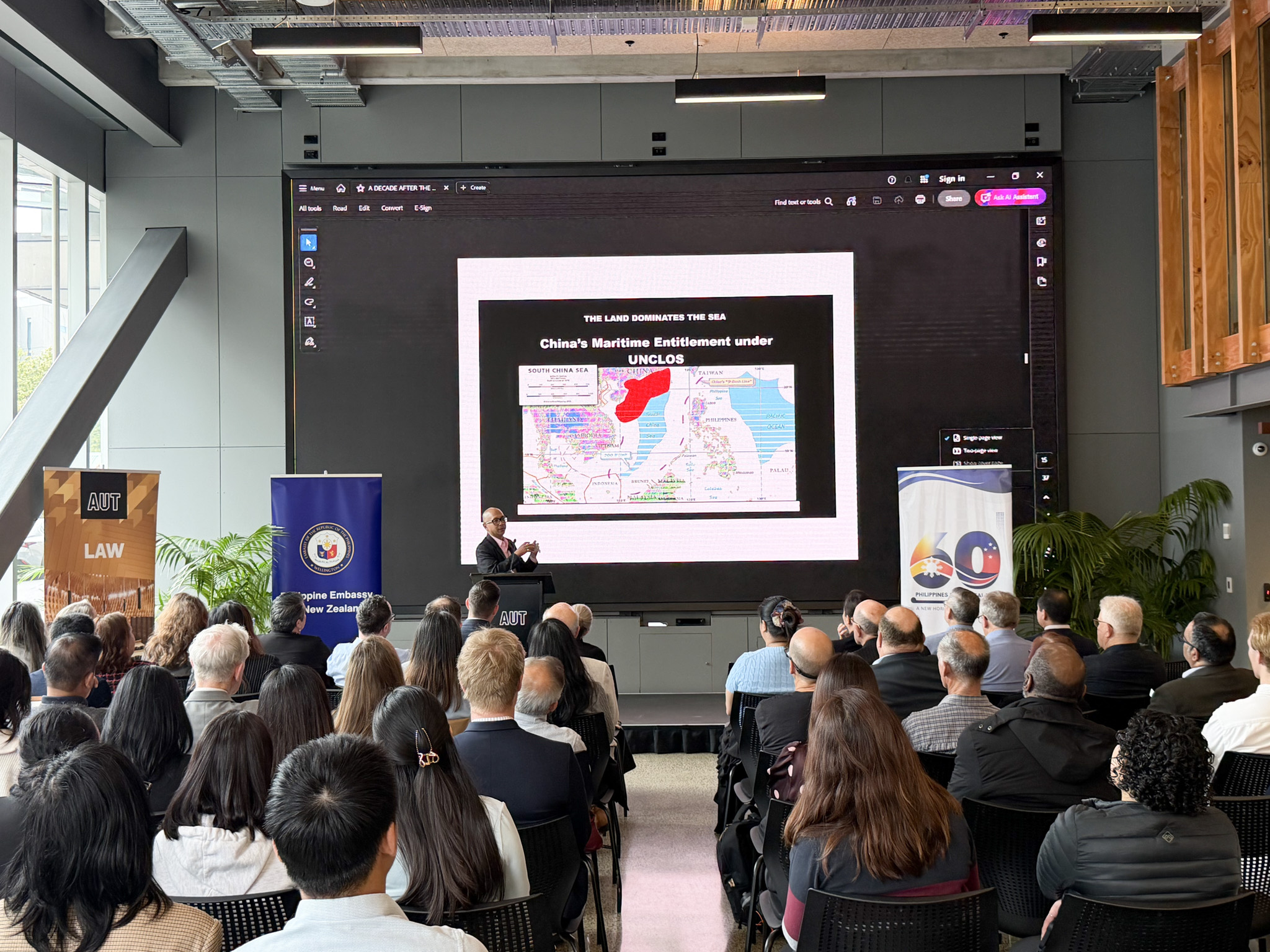
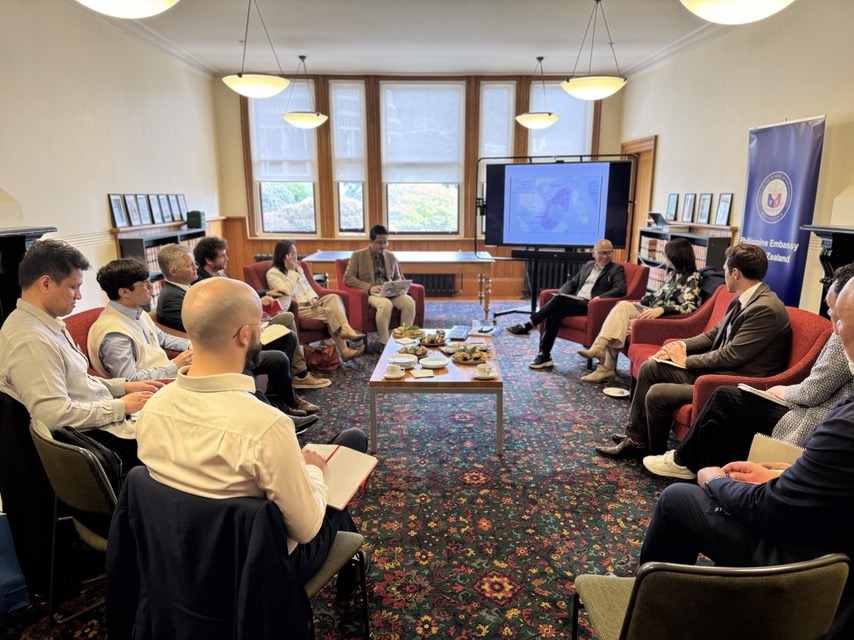
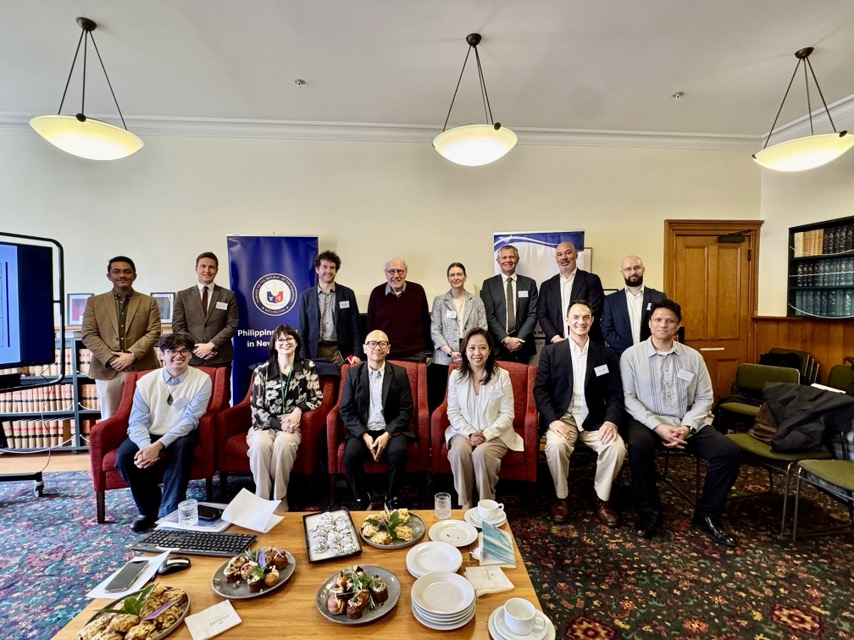
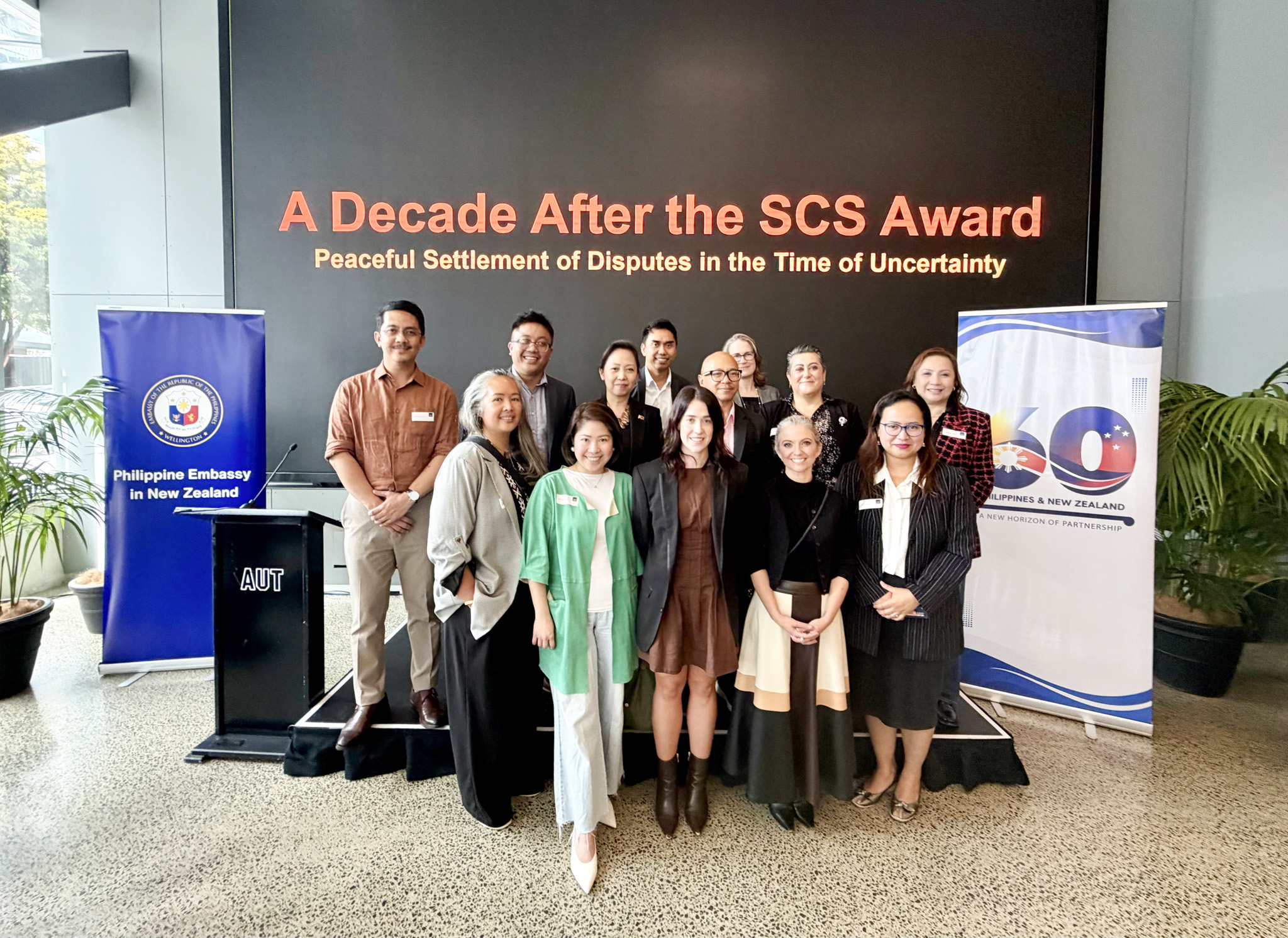
The commemorative activities were held in Wellington on 12 October and Auckland on 14 October 2026. In both cities, the Embassy convened round-table discussions, or kapihan, and public lectures that brought together experts, policymakers, academics, students, members of the diplomatic community, and representatives of the international affairs sector.
 |
 |
In the activities, Atty. Florin T. Hilbay, former Solicitor General of the Philippines and the Philippines’ Principal Agent in the arbitration proceedings against China, served as resource speaker. Drawing on his firsthand experience in the case, Atty. Hilbay discussed the legal foundations of the Philippines’ position and examined the Award’s continuing diplomatic, geopolitical, and regional implications.
The kapihan sessions provided a setting for candid and in-depth discussions among selected experts in international law, the law of the sea, environmental law, climate change, and public policy. The exchanges explored the Award’s relevance to maritime entitlements, the protection of the marine environment, the security of coastal communities, and the wider rules-based order in the Indo-Pacific.
During the commemorative events, Ambassador Kira Azucena reaffirmed the Philippines’ steadfast commitment to the peaceful settlement of disputes in accordance with international law. She also emphasized that the 2016 Arbitral Award should be understood not only as a legal milestone, but as part of a broader effort to protect communities, preserve the marine environment, and promote peace and cooperation at sea.

The Ambassador’s remarks echoed the message delivered by President Ferdinand R. Marcos Jr. during the national commemoration of the Award. In his speech, the President said that the Philippines had chosen “dialogue over confrontation, law over intimidation, and peace over conflict.”
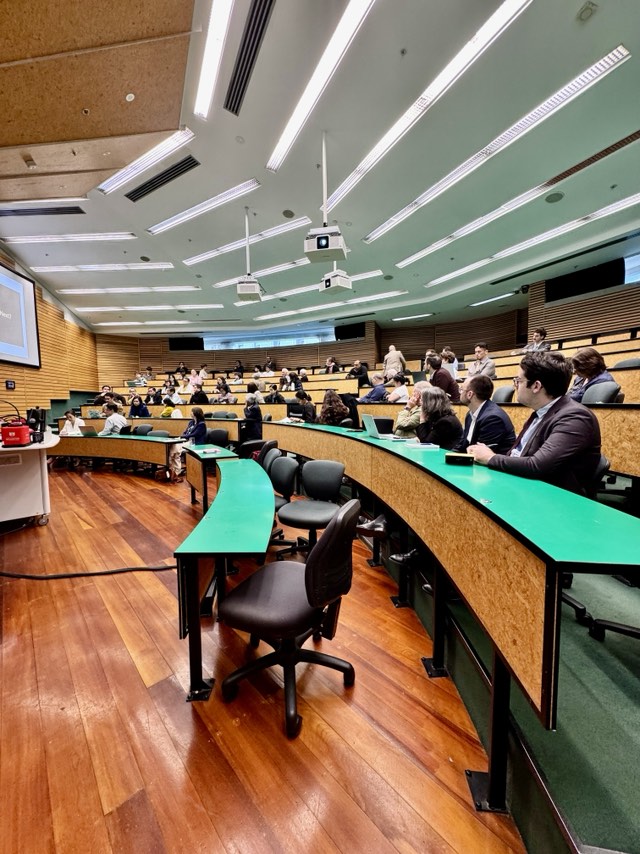
The public lectures, with each drawing over 70 attendees, provided a platform for participants to reflect on the Award’s enduring relevance to global maritime governance, regional security, and stability in the Indo-Pacific. The discussions further underscored the critical role of UNCLOS and other peaceful, rules-based mechanisms in resolving disputes among states.
 |
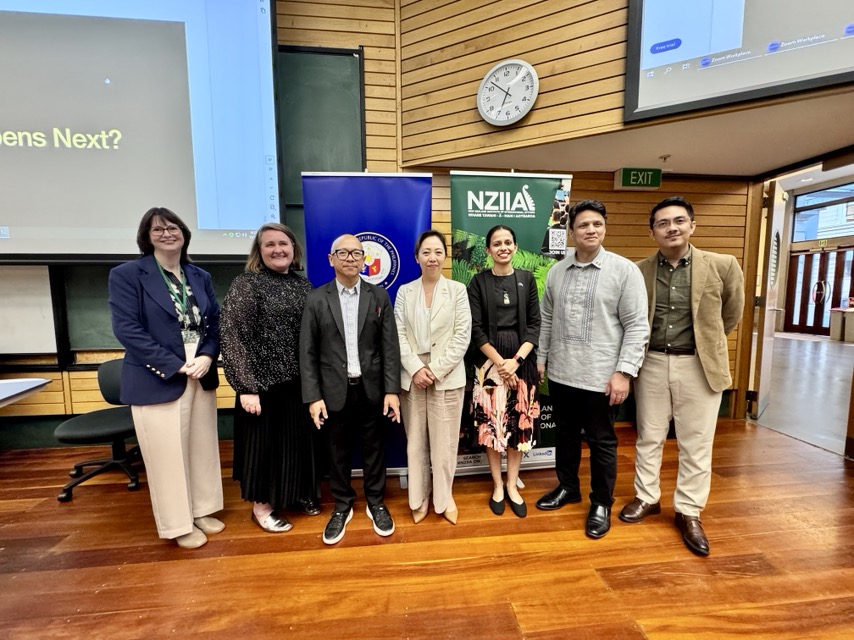 |
The Wellington public lecture was organized in partnership with the New Zealand Institute for International Affairs (NZIIA), the Asia New Zealand Foundation, Centre for Public Law, the Victoria University of Wellington and the Philippine Studies Network (PSN). In Auckland, the Embassy collaborated with the Auckland University of Technology (AUT) School of Law, the PSN, the AUT–Philippine Studies Hub and the Philippine Honorary Consulate in Auckland.
The activities also served as commemorative events of the 60th anniversary of the establishment of diplomatic relations between the Philippines and New Zealand and the elevation of its formal relationship to Comprehensive Partnership.
Ten years on, the 2016 Arbitral Award remains a defining milestone in the Philippines’ pursuit of a rules-based approach to maritime disputes. The Embassy’s commemorative activities reaffirmed the Philippines’ commitment to international law, peaceful dispute settlement, and constructive engagement with partners in New Zealand and throughout the Indo-Pacific.
Through these engagements, the Philippine Embassy in Wellington sought to deepen public understanding of the Award’s historical significance and lasting implications, while fostering continued dialogue on how international law can help advance peace, stability, cooperation, and a peaceful maritime order in the Indo-Pacific. END